

Why Folate Matters So Much During Pregnancy
Nutrition plays a critical role throughout pregnancy, as the developing fetus relies entirely on maternal nutrient availability to support growth and development. Many nutrients are required during this time, including folate (vitamin B9), which is especially important due to its role in early cellular growth and organ development.This vitamin is commonly referred to as folate or folic acid, and while these terms are often used interchangeably, they are not the same. These differences are clinically relevant because the form of folate influences its processing and use in the body.
Folate is a water-soluble B vitamin that supports normal cell division and DNA synthesis and plays a well-established role in helping prevent neural tube defects, including spina bifida. When intake or utilization of this vitamin is inadequate, the risk of folate deficiency increases, which has been associated with adverse pregnancy outcomes.
Because neural tube development occurs very early—often before many individuals realize they are pregnant—adequate intake of folate before and during pregnancy is widely emphasized in prenatal care, generally through the use of a prenatal vitamin.
To understand why folate form matters, it helps to look more closely at the differences between folate and folic acid.

Folate vs. Folic Acid: What’s the Difference?
To understand why folate form matters, it is important to examine how folate and folic acid—two different forms of vitamin B9—differ in metabolism and bioavailability.Folate refers to the naturally occurring forms of vitamin B9 found in foods such as leafy green vegetables, legumes, beans, and citrus fruits. These forms are biologically active after absorption and support key physiological processes, including DNA synthesis, cell division, and red blood cell formation.
Folic acid, by contrast, is a synthetic form of vitamin B9 used in dietary supplements and fortified foods, including many breakfast cereals and grain products. Folic acid is chemically stable and highly bioavailable, which is why it has been widely used in public health fortification programs to reduce the risk of neural tube defects.
Although they serve the same nutritional purpose, folate and folic acid function differently in the body.
Folic acid must undergo a series of enzymatic conversion steps to become biologically active as 5-methyltetrahydrofolate (5-MTHF), the form directly involved in methylation reactions, DNA synthesis, and red blood cell production.
This conversion relies on enzymes involved in folate metabolism, including methylenetetrahydrofolate reductase (MTHFR). In contrast, folate is metabolized in biologically reduced forms that can integrate more readily into the folate cycle, placing less reliance on downstream enzymatic conversion.
Recommended Folate Intake Before and During Pregnancy
Daily Folate Needs by Life Stage
Current recommendations express folate intake as dietary folate equivalents (DFEs) to account for differences in absorption between naturally occurring folate in foods and synthetic folic acid.
- Preconception: Individuals capable of becoming pregnant are advised to consume 400 mcg DFE per day to support folate status before conception.
- Early pregnancy and throughout pregnancy: During pregnancy, recommended intake increases to 600 mcg DFE per day to meet the demands of fetal growth, placental development, and increased maternal red blood cell production.
These intake levels are based on evidence demonstrating that adequate folate intake before and during early pregnancy reduces the risk of neural tube defects and supports normal fetal development.
When to Start and How Long to Continue Supplementation
Because neural tube closure occurs within the first few weeks of pregnancy, folate supplementation is recommended before conception, ideally beginning at least 3 months before conception and continued throughout pregnancy.
Ongoing supplementation is crucial for individuals who have difficulty meeting folate needs through diet alone, such as those experiencing nausea, food aversions, or limited intake of folate-rich foods, or those with increased nutrient requirements.

Top Food Sources of Folate for Pregnancy
Dietary sources of folate and folic acid contribute to overall intake both before and during pregnancy. Folate is naturally occurring in a range of whole foods, while folic acid is found in fortified foods such as whole grains and breakfast cereals.Below are common folate-rich foods that are safe and recommended during pregnancy when properly prepared.
Leafy Green Vegetables
Leafy greens such as spinach, romaine lettuce, kale, and arugula are among the richest sources of folate and can be included regularly during pregnancy, provided they are thoroughly washed.
In addition to leafy greens, other vegetables, particularly asparagus, also contribute meaningfully to folate intake.
One cup of cooked asparagus provides approximately 130 micrograms of folate, making it one of the highest vegetable sources of naturally occurring folate. Including a variety of folate-rich vegetables helps support consistent folate intake while also providing fiber and other essential micronutrients.
Legumes and Beans
Legumes are among the most concentrated food sources of folate. Lentils are a standout option, with about 350 micrograms of folate per cup when cooked, making them an efficient way to boost intake during pregnancy.
Citrus Fruits
Citrus fruits contribute smaller but meaningful amounts of folate. Oranges are one of the highest citrus sources, providing approximately 40 micrograms of folate per medium fruit, along with vitamin C. They are often well tolerated during pregnancy, particularly in early pregnancy.
Nuts and Seeds
Nuts and seeds provide modest amounts of folate along with quality fats. Sunflower seeds are one of the highest sources in this category, with roughly 80 micrograms of folate per quarter-cup, making them an easy addition to meals and snacks.
Eggs
Eggs contain smaller amounts of folate but offer additional nutrients that support pregnancy. One large egg provides approximately 25 micrograms of folate, along with high-quality protein and choline, another nutrient essential for fetal development.
Choosing a Prenatal Supplement With Folate
While dietary sources and intake recommendations form the foundation of folate nutrition during pregnancy, the form of folate included in a prenatal supplement also matters. Prenatal supplements vary widely in the type of folate they provide, and understanding these differences can help support effective folate utilization during pregnancy.
The appropriate form and amount of folate may vary based on individual needs. Factors such as overall dietary intake, supplement use, and genetic differences affecting folate metabolism may influence how folate is utilized in the body, and therefore, which type is most appropriate.
Individualized medical guidance is recommended when choosing a prenatal supplement, particularly when considering folate versus folic acid during pregnancy.
How to Read Labels for Folate and Folic Acid
When reviewing a prenatal supplement label, folate may appear under several names, making comparisons difficult without knowing what to look for. Folate is typically listed on the Supplement Facts panel as either folate or folic acid, along with the amount provided per serving.
Common label terms include:
- Folic acid – the synthetic form of folate commonly used in supplements and fortified foods
- Folate – a general term that may refer to naturally occurring folate or supplemental folate forms
- 5-methyltetrahydrofolate (5-MTHF) or L-5-MTHF – bioactive forms of folate already in the form used directly by the body
- (6S)-5-MTHF – the biologically active stereoisomer of 5-MTHF found in circulation
Labels often clarify the folate source in parentheses, such as “folate (as folic acid) or “folate (as 5-MTHF)”, which indicates the specific form included in the supplement.
Another essential detail is the unit of measurement. Folate is frequently listed as micrograms (mcg) of dietary folate equivalents (DFEs), a system used to account for differences in absorption between folic acid and naturally occurring folate. While DFEs help standardize intake amounts across forms, they do not reflect individual differences in folate metabolism or utilization.
Understanding these label terms allows consumers and healthcare professionals to identify not only how much folate a prenatal supplement provides, but which form is being used, which may be relevant when considering individual needs, tolerance, and metabolic variability.
What Differentiates Optifolin+®
Optifolin+® is a folate ingredient designed to deliver folate in a fully bioactive form, providing folate that is ready for use without requiring metabolic conversion. The folate provided by Optifolin+® is present as L-5-methyltetrahydrofolate, the primary physiological form of folate found in circulation, breastmilk, and cord blood.
Human pharmacokinetic data support differences in absorption between folate forms. In a randomized, double-blind, crossover study, Optifolin+ demonstrated significantly higher bioavailability than folic acid at an equivalent oral dose, along with favorable solubility and stability characteristics.
These properties are relevant to both intestinal absorption and the consistency of nutritional formulations.
Genetic Variants (Such as MTHFR) and Folate Needs
Genetic variation in enzymes involved in folate metabolism is common. Variants in genes such as methylenetetrahydrofolate reductase (MTHFR) can reduce the efficiency with which folic acid is converted into its active form. Estimates suggest that a substantial portion of the population carries variants that affect folate metabolism to varying degrees.
For individuals with reduced conversion capacity, providing folate in a bioactive form may help support more efficient utilization. While genetic testing is not routinely required, awareness of these variations helps explain why folate form, not just total intake, may be a relevant consideration in prenatal supplementation.
Choline Enrichment and Methylation Support
In addition to folate form, the availability of methyl donors influences methylation capacity during pregnancy. Optifolin+® is a choline-enriched folate, bound to a choline salt that contributes seven times the additional methyl groups to the body’s methyl pool.
Although the amount of choline present is not intended to meet dietary choline requirements, these methyl groups support methylation and epigenetic processes that are particularly active during pregnancy.
By contributing to the body’s available methyl pool, choline-enriched folate may help support the increased methylation demands associated with fetal growth and development.
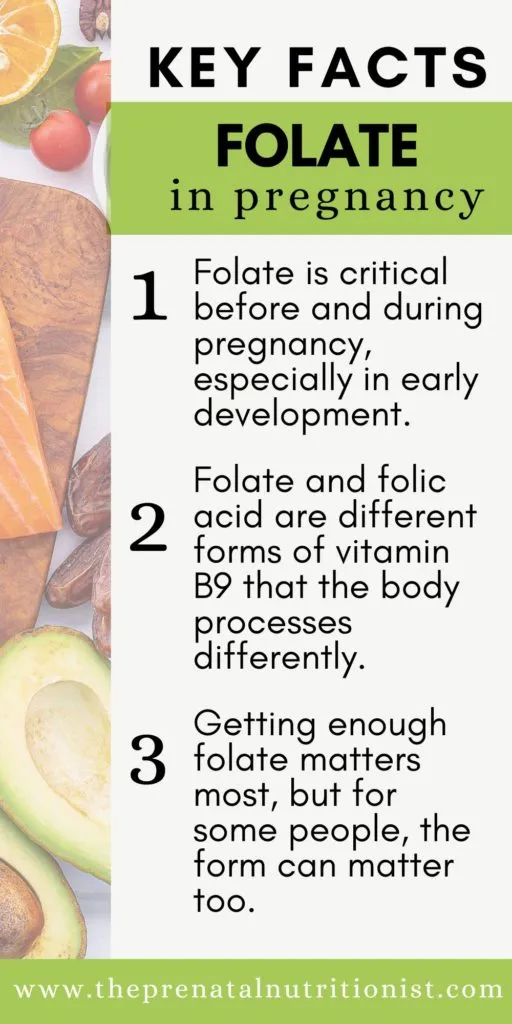
The Bottom Line on Folate in Pregnancy
Folate is essential before and during pregnancy for healthy fetal development, supporting normal cell division and red blood cell production. Because folate and folic acid differ in form and metabolism, the type and timing of supplementation can matter, particularly for individuals with genetic variants such as MTHFR. Combining dietary sources with appropriate supplementation helps support optimal folate status from preconception through pregnancy.Where to Find Optifolin+®
Optifolin+® is available for use in a variety of nutritional formulations. To learn more about Optifolin+®, including its features and applications, or to find products that contain this ingredient, visit the ‘Where to Buy’ section of the Optifolin+® website.Disclaimer
This post is in partnership with Balchem. These statements have not been evaluated by the Food and Drug Administration. This product is not intended to diagnose, treat, cure, or prevent any disease.
Ryann Kipping
Licensed Dietitian & Founder of The Prenatal Nutrition Library
Prenatal dietitian with a Master's in Public Health and author of The Feel-Good Pregnancy Cookbook. Founder of The Prenatal Nutrition Library App.

Make pregnancy nutrition simple.
Get custom meal plans, 600+ dietitian-approved recipes, and our "Can I eat…?" search—plus, trimester-by-trimester nutrition priorities and more.